infocareer@admn
- Posted on
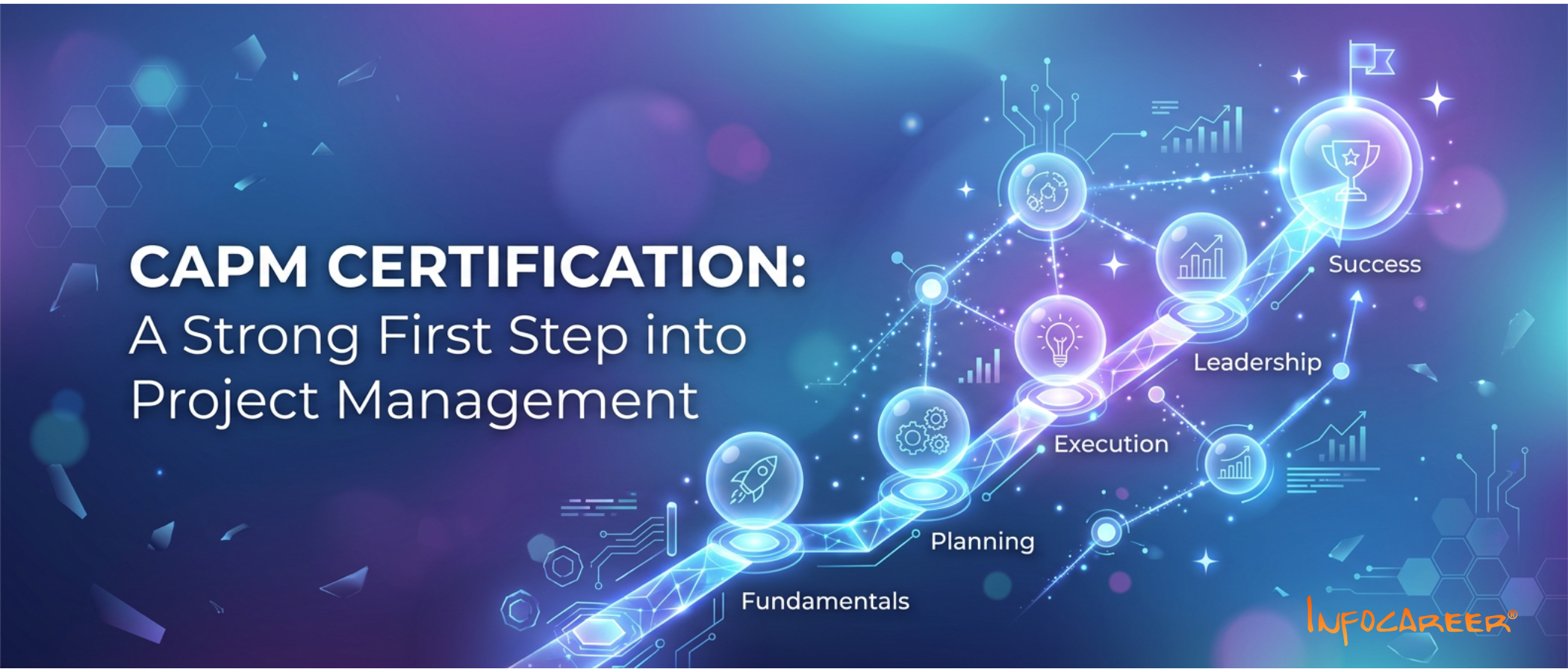
CAPM certification is one of the best starting points for professionals who want to build a career in project management. As organizations across industries adopt project-driven work models, professionals who understand structured project frameworks gain a strong advantage.
Many professionals contribute to projects long before they hold the official title of project manager. Coordinating teams, managing timelines, organizing tasks, and aligning stakeholders are all examples of project management in real workplaces.
CAPM certification helps transform these everyday experiences into structured project management knowledge, providing a strong foundation for career growth and leadership opportunities.
Understanding the Value of CAPM Certification
The Certified Associate in Project Management (CAPM) certification helps professionals build foundational project management knowledge.
CAPM is offered by the globally recognized Project Management Institute (PMI), the organization responsible for developing project management standards used worldwide. You can explore more about the certification on the PMI official website.
Through CAPM certification, professionals learn key concepts such as:
- Project lifecycle stages
- Planning and execution strategies
- Risk identification and response
- Stakeholder communication
- Scope and resource management
These frameworks help professionals approach work with greater clarity and structure.
For many professionals, CAPM certification provides the language and methodology needed to understand how successful projects are managed.

Recognizing Your Existing Project Management Skills
Many professionals already use project management skills in their daily roles.
Even without the project manager title, professionals may already be:
- Coordinating team activities
- Tracking deadlines and deliverables
- Managing cross-team communication
- Handling priorities and timelines
- Supporting initiatives involving multiple stakeholders
These responsibilities reflect real project experience.
CAPM certification helps translate these experiences into structured project management language, making it easier to communicate skills and contribute to project teams.
Professionals interested in expanding their knowledge often explore project management certification training programs that help prepare for certifications like CAPM and PMP.
How CAPM Certification Builds a Strong Foundation
CAPM certification introduces professionals to structured project management approaches used across industries.
During preparation, professionals gain clarity on topics such as:
- Project planning techniques
- Work breakdown structures
- Risk management strategies
- Communication planning
- Stakeholder engagement
These concepts help professionals move from task-level execution to structured project thinking.
CAPM preparation also introduces the Project Management Body of Knowledge (PMBOK Guide), a globally recognized reference for project management practices.

Demonstrating Commitment to a Project Management Career
Early in a career transition, employers look for signals that show dedication to professional growth.
Pursuing CAPM certification demonstrates:
- Commitment to continuous learning
- Discipline in achieving professional goals
- Interest in structured project methodologies
- Readiness to grow into project-focused roles
For many professionals from fields such as IT, operations, engineering, marketing, and analytics, CAPM certification becomes the first step toward a project management career.
Combining CAPM Knowledge with Real Project Experience
Certification becomes more valuable when combined with real-world exposure.
Professionals preparing for CAPM often strengthen their learning by:
- Supporting project teams
- Assisting with coordination activities
- Participating in planning discussions
- Tracking project deliverables
These experiences help connect theoretical knowledge with real workplace situations.
Over time, professionals develop stronger communication, decision-making, and project coordination skills.
Learning Through Mentorship and Guidance
Mentorship plays an important role in building project management confidence.
Experienced professionals can guide aspiring project professionals in:
- Managing stakeholder expectations
- Handling project challenges
- Prioritizing tasks effectively
- Improving communication across teams
Learning from mentors helps professionals understand how project frameworks work in real business environments.
Conclusion
Project management skills are becoming essential across industries as organizations rely on structured planning and execution.
Many professionals already contribute to project success through coordination, planning, and collaboration.
CAPM certification helps transform these experiences into recognized professional capabilities.
By introducing structured frameworks and globally accepted practices, CAPM enables professionals to build a strong foundation for a successful project management career.
Curious About Project Management Certifications?
Many professionals begin their journey with CAPM and later progress toward advanced certifications like PMP.
Join our free project management webinar and discover how professionals successfully prepare for global certifications.