infocareer@admn
- Posted on
The modern workplace is evolving rapidly. In 2026, professionals across industries are experiencing a noticeable shift in how daily responsibilities are managed, decisions are made, and collaboration happens.
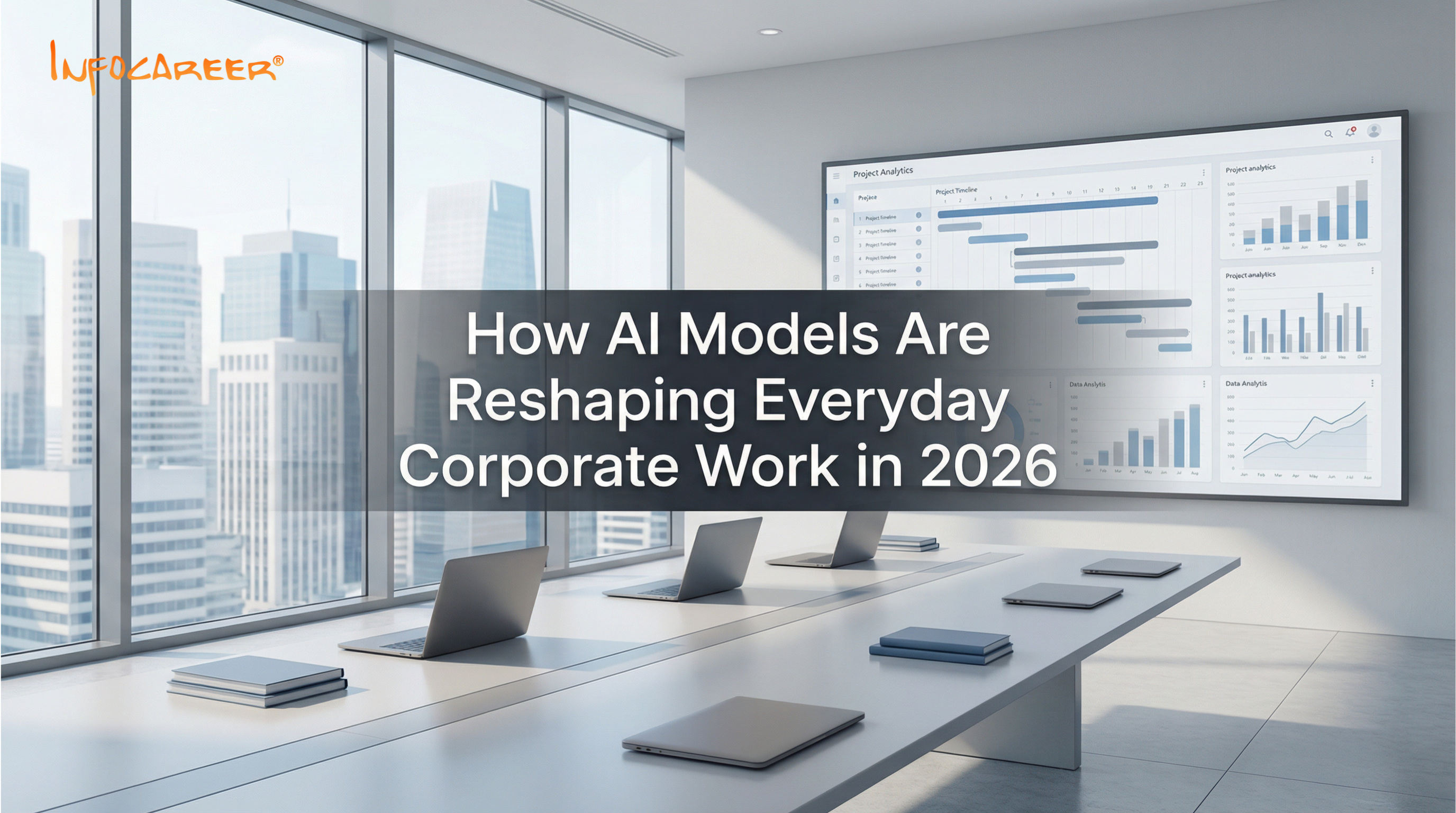
AI in everyday corporate work 2026 is no longer a future concept. It has become part of routine workflows, helping teams operate with greater clarity, speed, and structure.
This shift is strengthening productivity while also raising expectations for leadership and strategic thinking.
Smarter Workflows and Faster Execution
Administrative overload has reduced significantly in many organisations. Tasks that once consumed hours drafting reports, summarising documents, organising data are now completed more efficiently.
Managers are spending less time formatting information and more time interpreting insights.
Teams are using intelligent tools to:
- Prepare structured presentations
- Analyse large data sets quickly
- Generate meeting summaries
- Identify emerging risks in projects
The focus is gradually shifting from repetitive execution to informed decision-making.

Better Decision Support Across Departments
Corporate planning has become more insight-driven.
Instead of manually reviewing spreadsheets and scattered reports, professionals now receive summarised patterns and trend highlights that support faster analysis.
Sales teams forecast demand with greater accuracy.
HR teams monitor engagement patterns efficiently.
Operations leaders detect bottlenecks earlier.
Finance teams streamline reporting cycles.
According to the World Economic Forum’s Future of Jobs Report, analytical thinking and technological literacy remain among the top skills required in evolving workplaces.
This reinforces the need for professionals to combine digital tools with structured judgment.
Collaboration Has Become More Structured
Another visible change in AI in everyday corporate work 2026 is the improvement in team coordination.
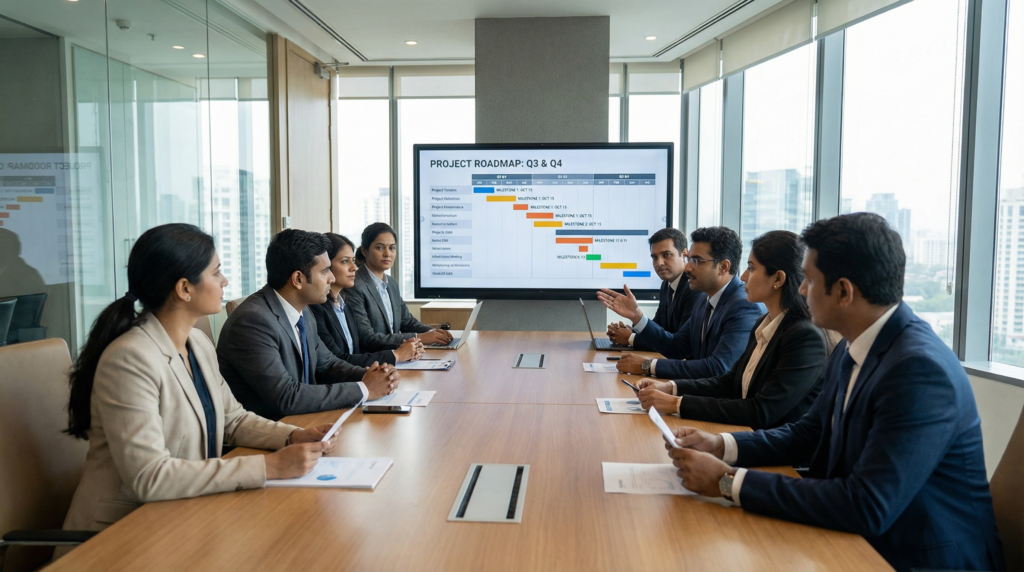
Meetings are shorter and more focused because agendas and summaries are prepared in advance. Documentation is clearer. Follow-ups are more accountable.
Remote and hybrid teams maintain better continuity, especially when managing cross-functional initiatives.
This has strengthened professional credibility. Clear communication and structured updates create confidence among stakeholders.
Productivity Without Burnout
One of the most positive outcomes of this transition is improved workload balance.
When repetitive drafting and manual analysis are reduced, professionals gain time for:
- Strategic planning
- Learning and upskilling
- Stakeholder engagement
- Innovation initiatives
However, productivity tools alone are not enough. Professionals still need structured thinking frameworks to lead effectively.
This is where structured project thinking plays a significant role. Combining digital efficiency with leadership discipline ensures sustainable performance.
Leadership Expectations Are Rising
As daily execution becomes more streamlined, expectations from professionals are evolving.
Organisations increasingly value:
- Critical thinking
- Risk awareness
- Outcome ownership
- Strategic communication
- Initiative leadership
Technical skills support execution. Structured thinking supports impact.
The professionals who adapt successfully in 2026 are those who align efficiency with accountability and long-term vision.
The Real Shift: From Tasks to Value Creation
The transformation we see today is behavioural, not just technological.
Corporate environments are moving from task completion toward measurable value creation.
AI in everyday corporate work 2026 supports efficiency, but human judgment, ethical decision-making, and leadership presence remain central to success.
Those who invest in structured learning and career clarity are positioning themselves strongly in this evolving environment.
The workplace is changing steadily. The advantage lies with professionals who prepare intentionally.